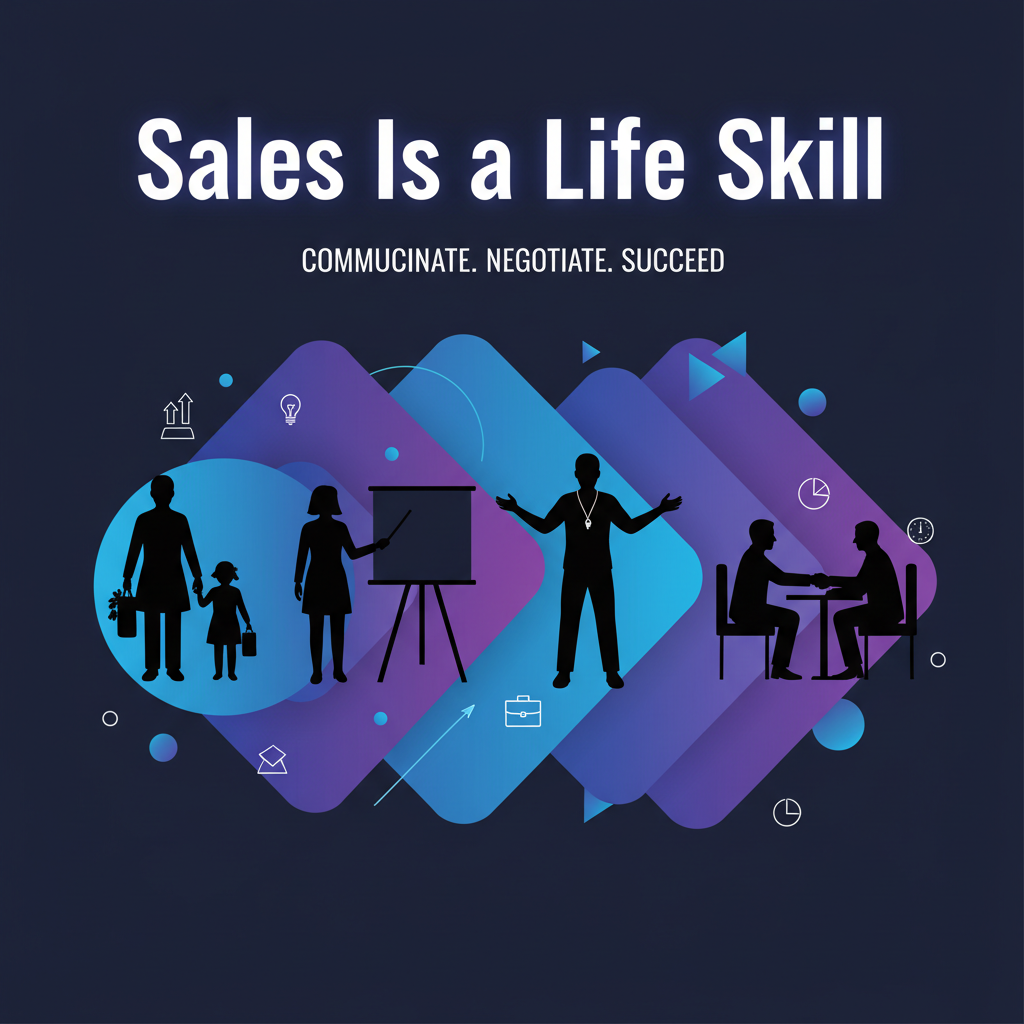
You're Already in Sales. You Just Don't Know It.
When most people hear the word sales, they picture a pushy car dealership rep or a telemarketer calling during dinner.
But here's the truth that changes everything:
You are already selling every single day. You just don't call it that.
In his book To Sell Is Human, bestselling author Daniel Pink found that people spend roughly 40% of their workday in what he calls "non-sales selling" — influencing, persuading, and convincing others to do something, with no transaction involved whatsoever.
That's almost half your waking hours.
The People Who Are "Not in Sales"
Let's play a game. Tell me which of these people isn't in sales:
- The parent who convinces their 4-year-old that broccoli is actually delicious
- The teacher who has to sell their students on why algebra matters
- The coach who rallies a team down 3 points with two minutes left
- The doctor who has to persuade a patient to change their lifestyle
- The job seeker who walks into an interview and has to convince a stranger to take a chance on them
Every single one of them is selling. They're selling ideas, possibilities, trust, and change.
Sales isn't just a job title. It's a fundamental human skill.
What Sales Actually Is
Strip away the stereotypes and here's what sales really boils down to:
- Understanding what someone needs (discovery)
- Communicating how you can solve it (value proposition)
- Building enough trust that they take action (relationship)
Does that sound manipulative? It shouldn't — because when done right, sales is about genuine value exchange. You're helping someone get what they actually need.
The best salespeople aren't the loudest in the room. They're the best listeners.
Why This Matters for Your Career
Here's where it gets personal.
If you're job searching, you are absolutely, 100%, without question, in sales. You are the product. Your resume is the brochure. Your interview is the pitch meeting. Your references are the case studies.
And just like in sales, the candidates who win aren't always the most qualified — they're the ones who:
- Prospected (built relationships before they needed a job)
- Qualified (targeted roles that were actually a fit)
- Built trust before ever sending a proposal (their application)
The job seeker who understands sales doesn't just apply and hope. They build a pipeline.
The Skill Nobody Taught You
Schools teach you to memorize, analyze, and test. Very few teach you how to:
- Communicate your value clearly
- Influence a room without formal authority
- Build relationships with people you've never met
- Follow up without being annoying
- Handle rejection and keep going
These are sales skills. And they are among the most valuable skills you can develop — in your career, your relationships, and your life.
Start Here
You don't need to become a salesperson to benefit from thinking like one. Start with these three shifts:
1. Lead with curiosity, not pitch. Before you talk about yourself in an interview or networking conversation, ask questions. Understand what they need.
2. Know your value proposition. Can you articulate in 30 seconds what you do, who you help, and what outcome you deliver? If not, that's your homework.
3. Follow up like a pro. Most opportunities die in the follow-up gap. A thoughtful follow-up message after an interview or coffee chat is the difference between forgotten and hired.
Sales is not a dirty word. It's the language of human connection, influence, and progress.
The sooner you embrace it, the faster everything else gets easier.